
Longfellow Classroom Welcomes New Classmates
In February, Longfellow 5th graders welcomed red wiggler earthworms to their classroom to process their compost and build rich organic matter for spring gardening projects. Students started by learning the composting recipe and process, before learning some key differences for vermicomposting. They then documented items suitable for trash, recycling/redemption, compost, and vermicompost and set up collection buckets for each category.
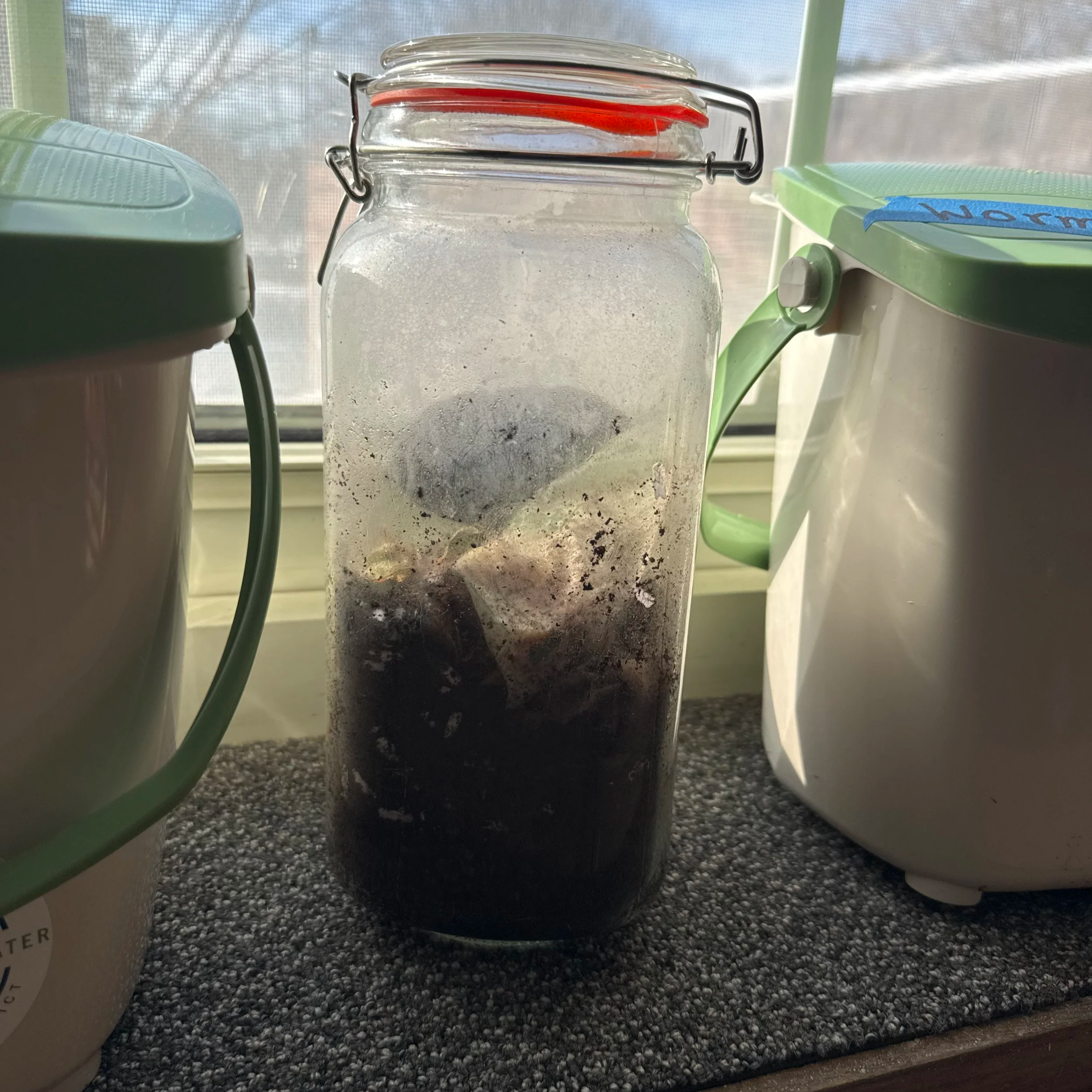
Compost experiment jar setup to test a commercially compostable snack bag.
At the end of the lesson, each class set up an experiment to track through the end of the school year. One class assembled a composting observation jar with some moist soil, shredded newspaper, kitchen scraps, and a commercially compostable snack bag. The commercially compostable snack bag was half buried in the compostable material, half exposed to the air to observe any decomposition.
The second class set up three worm bin layers, one empty (Layer C), one midway through the vermicomposting process (Layer B), and one just getting started (Layer A). The students then created tracking grids to record the frequency and amount of food they feed the worms.
This amazing unit is funded by the City of Portland through the Greener Neighborhoods Cleaner Streams program and taught by the Cumberland County Soil & Water Conservation District.
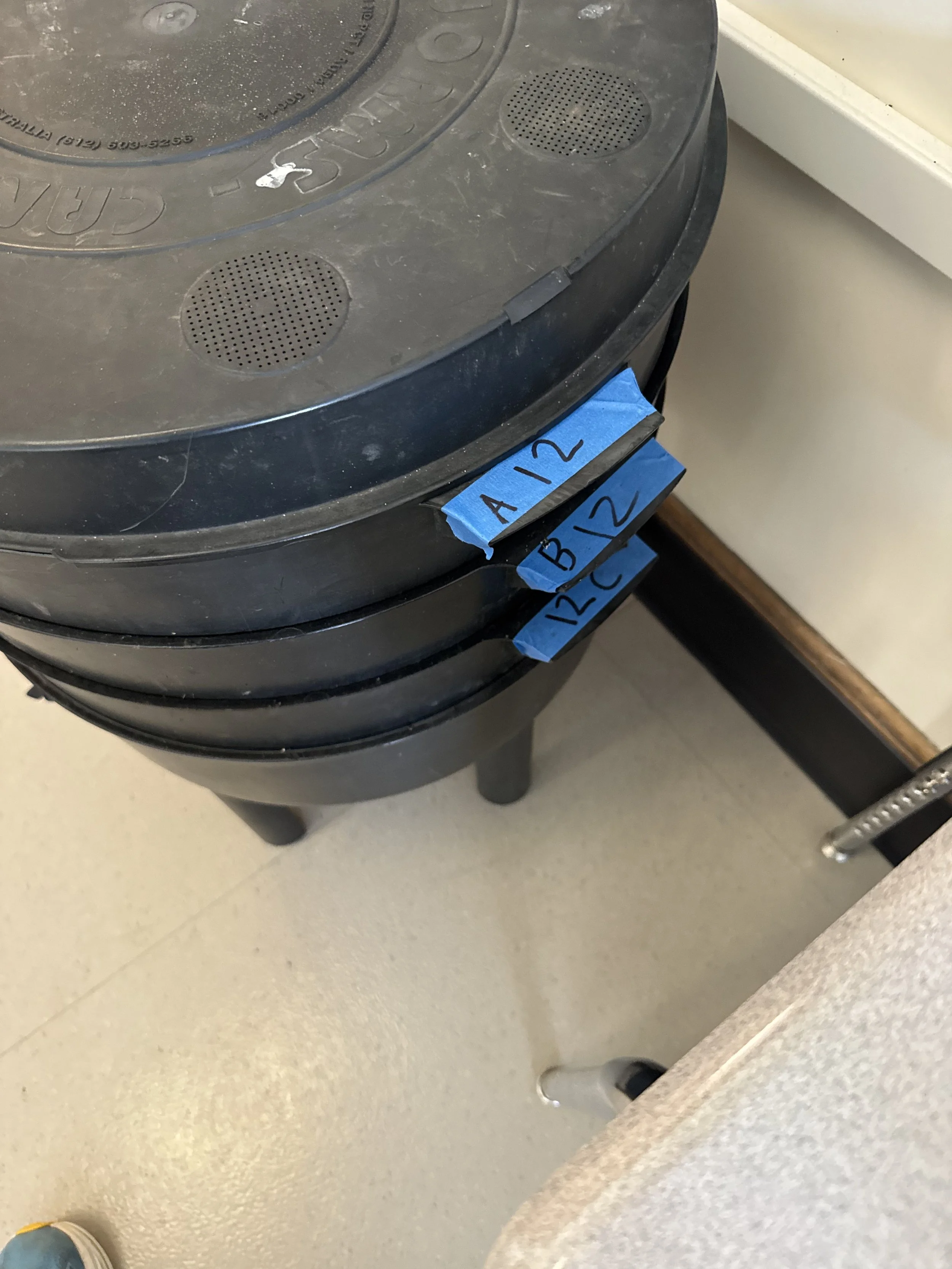
Vermicomposting bin setup with three layers.
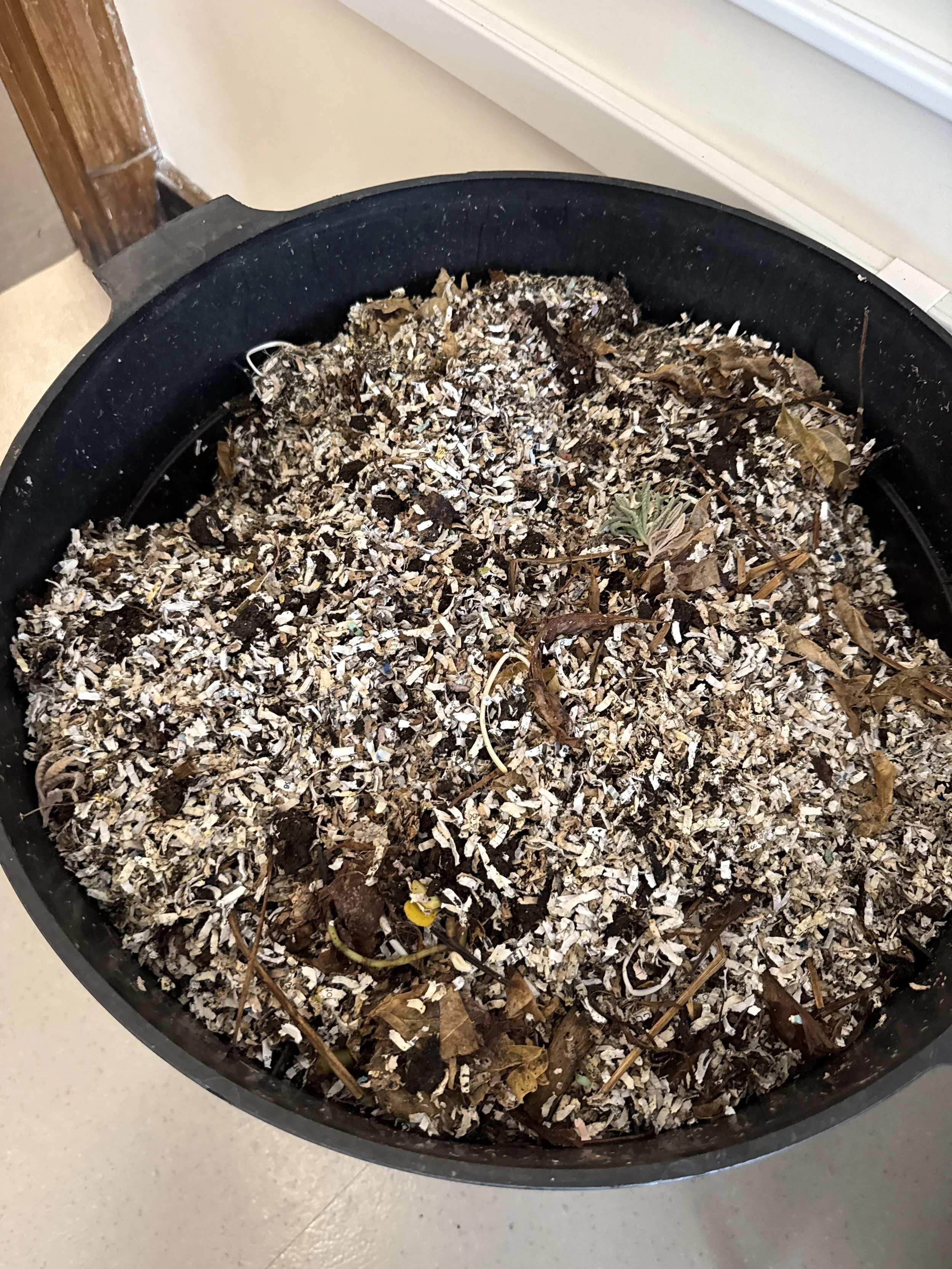
Vermicomposting bin Layer A - starting the process.
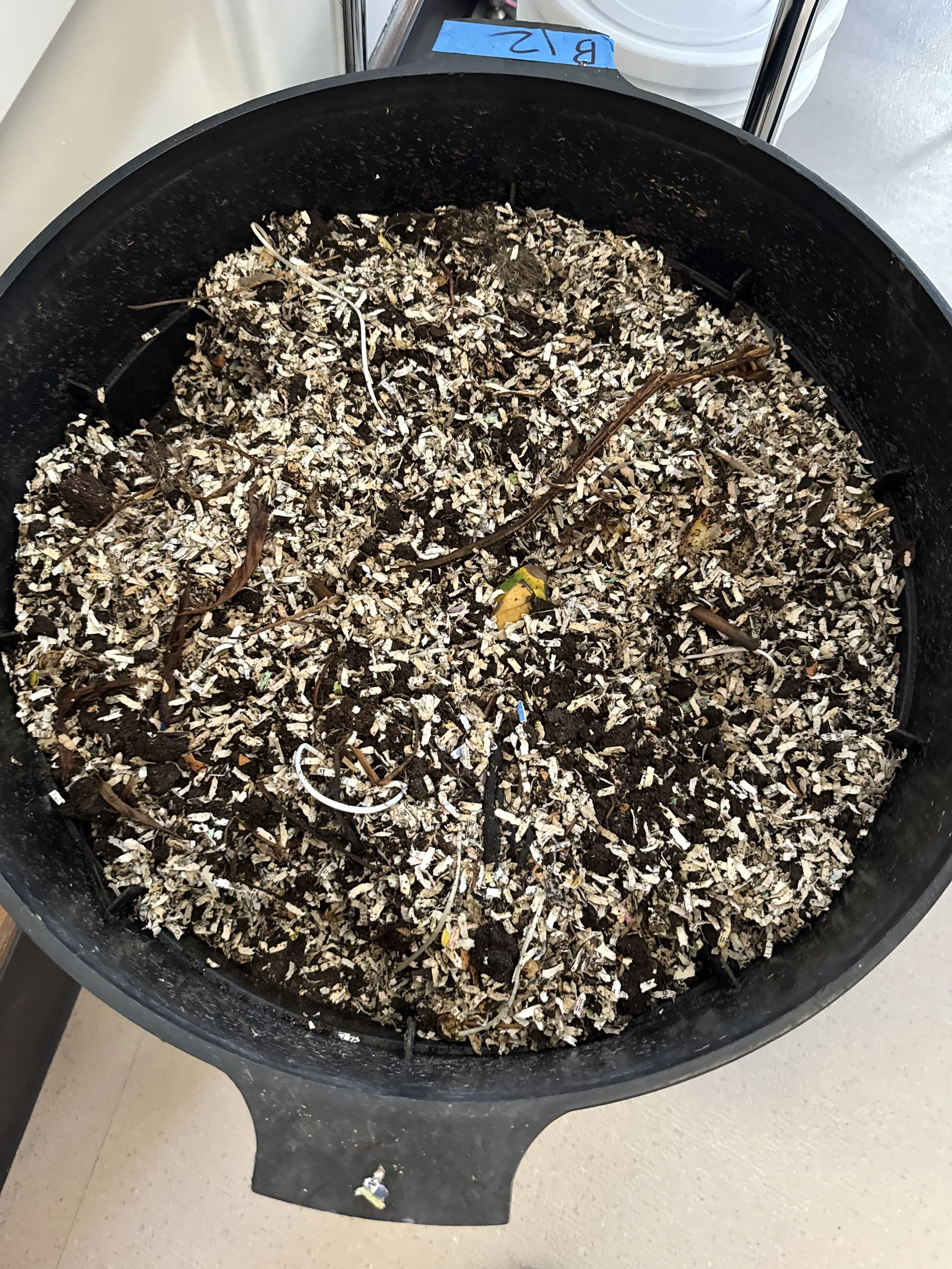
Vermicomposting bin Layer B - midway through the process.