
Longfellow Composting Results
In May, Longfellow 5th graders made their final observations on their composting experiments.
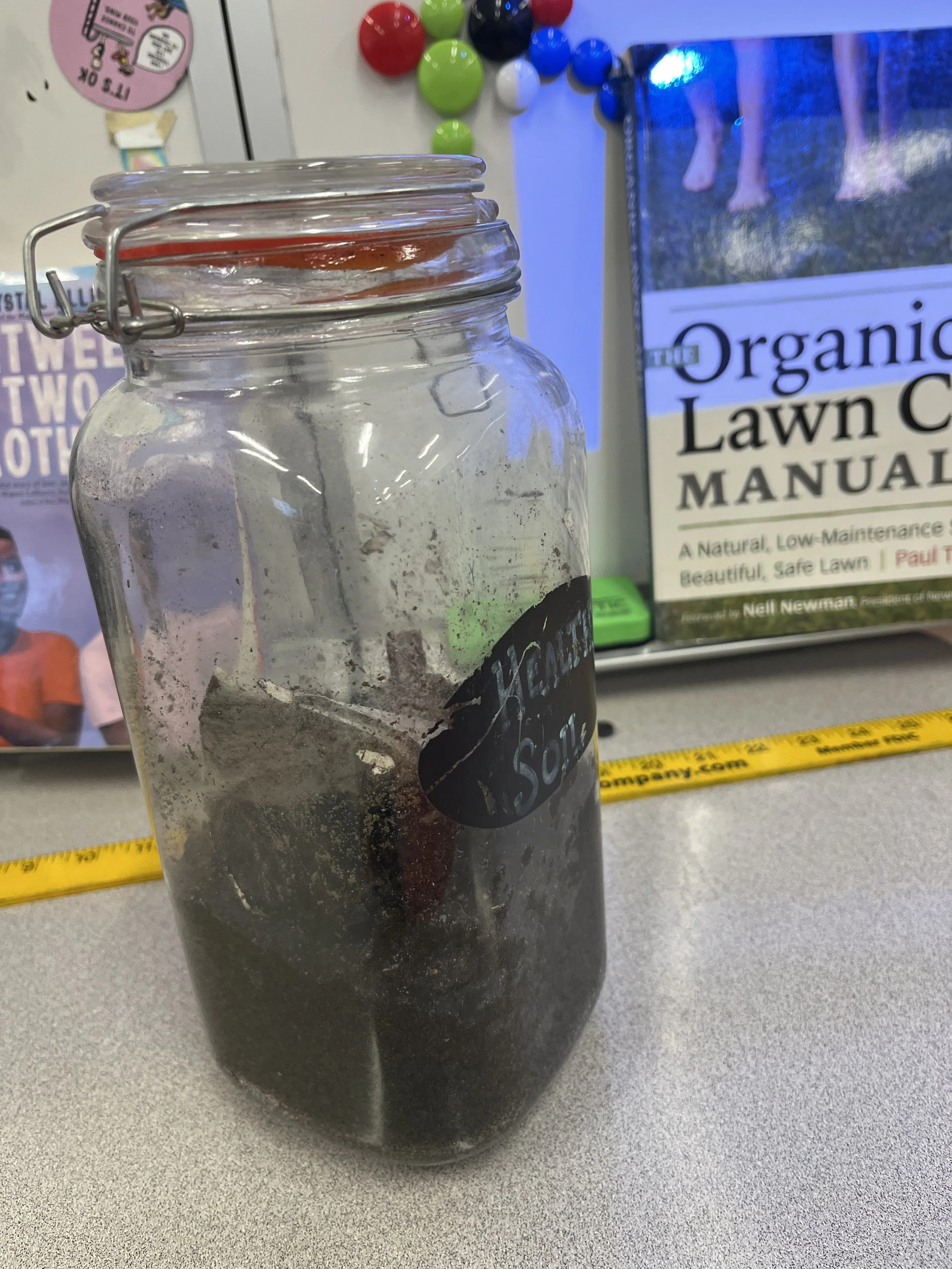
Compost experiment jar still contains an intact commercially compostable snack bag.
The composting observation jar worked really well, with all of the kitchen scraps and almost all of the shredded newspaper successfully composted. The commercially compostable snack bag however did not breakdown at all above or below the soil. Therefore, the students recommend skipping the compostable snack bags and using reusable containers instead.
The second class set up three worm bin layers, one empty (Layer C), one midway through the vermicomposting process (Layer B), and one just getting started (Layer A). The students then created tracking grids to record the frequency and amount of food they feed the worms.
This amazing unit is funded by the City of Portland through the Greener Neighborhoods Cleaner Streams program and taught by the Cumberland County Soil & Water Conservation District.
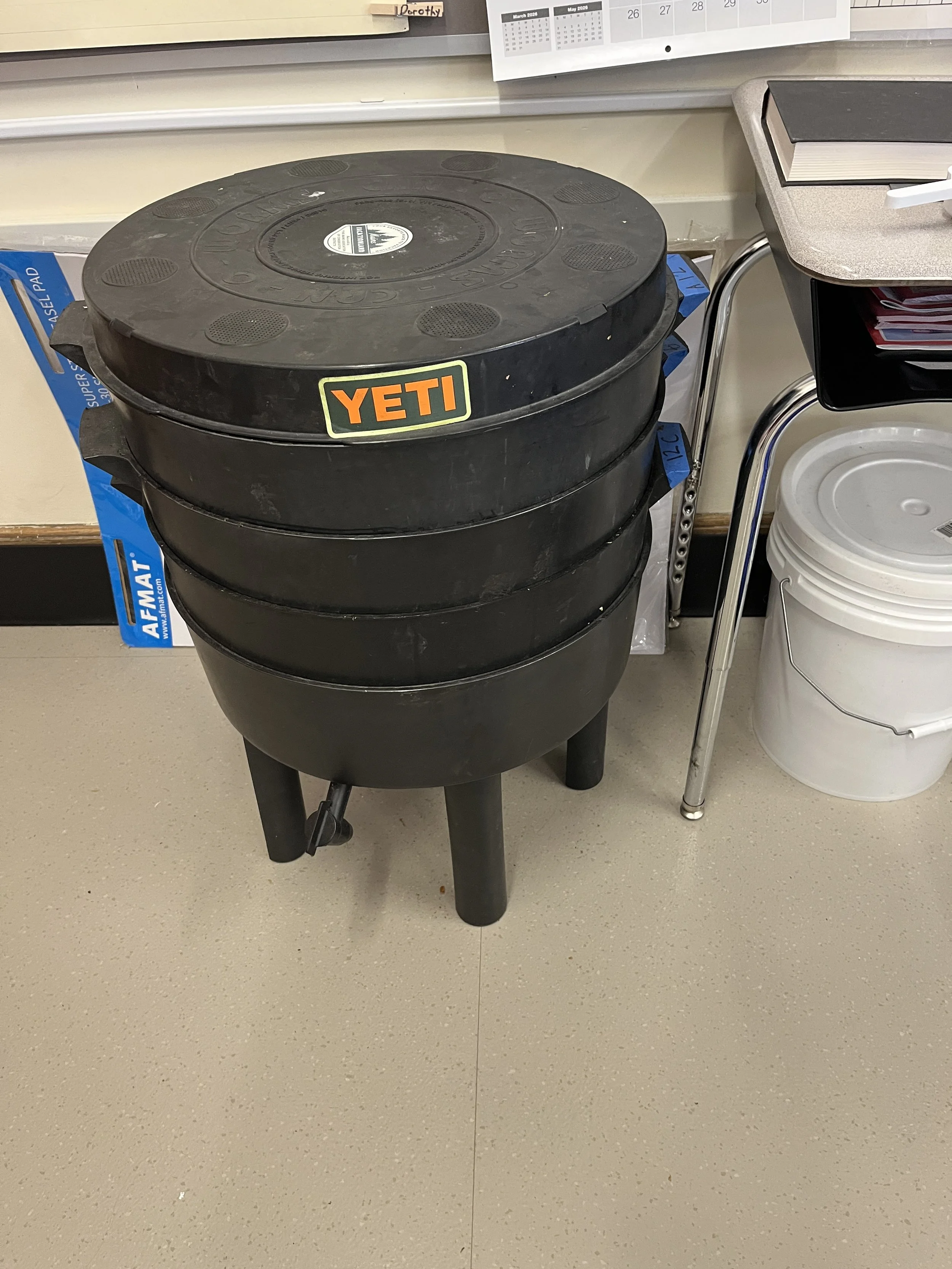
Vermicomposting bin setup with three layers.
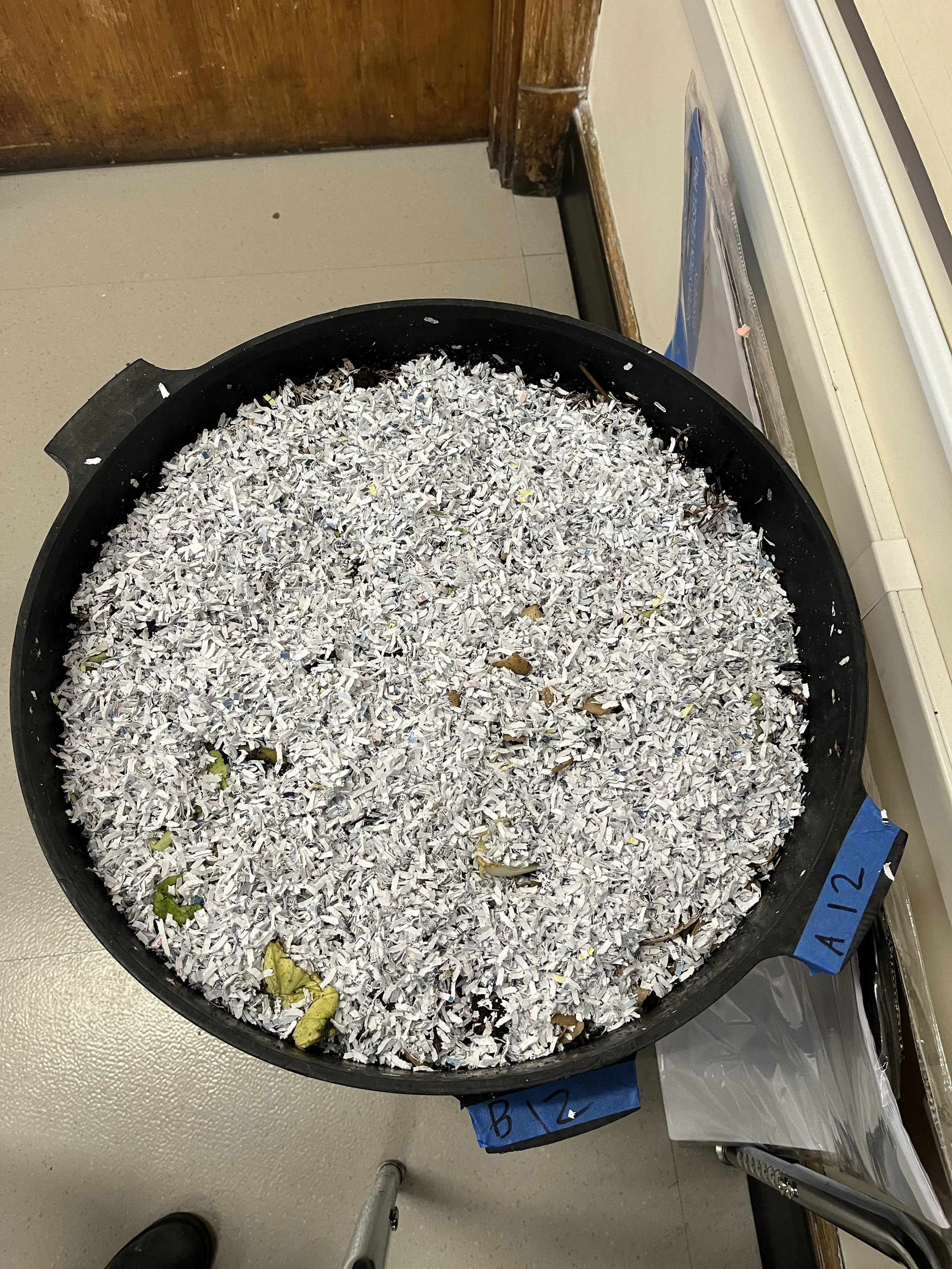
Vermicomposting bin Layer A - the layer is full of red wigglers converting fresh materials into organic matter.
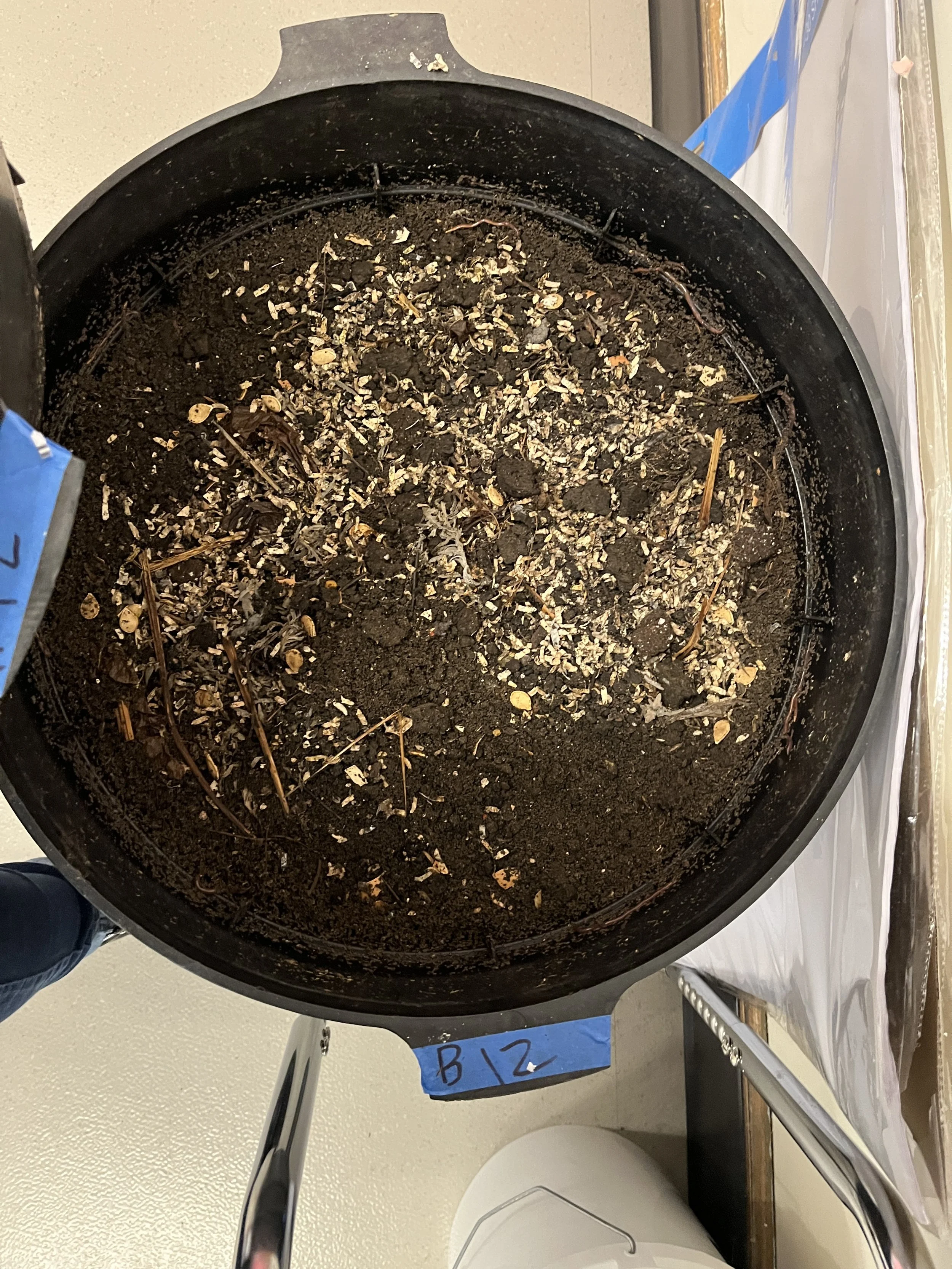
Vermicomposting bin Layer B - midway through the process.